Can Poor Sleep Be a Spine Problem? The Surprising Link Between Alignment and Restorative Sleep
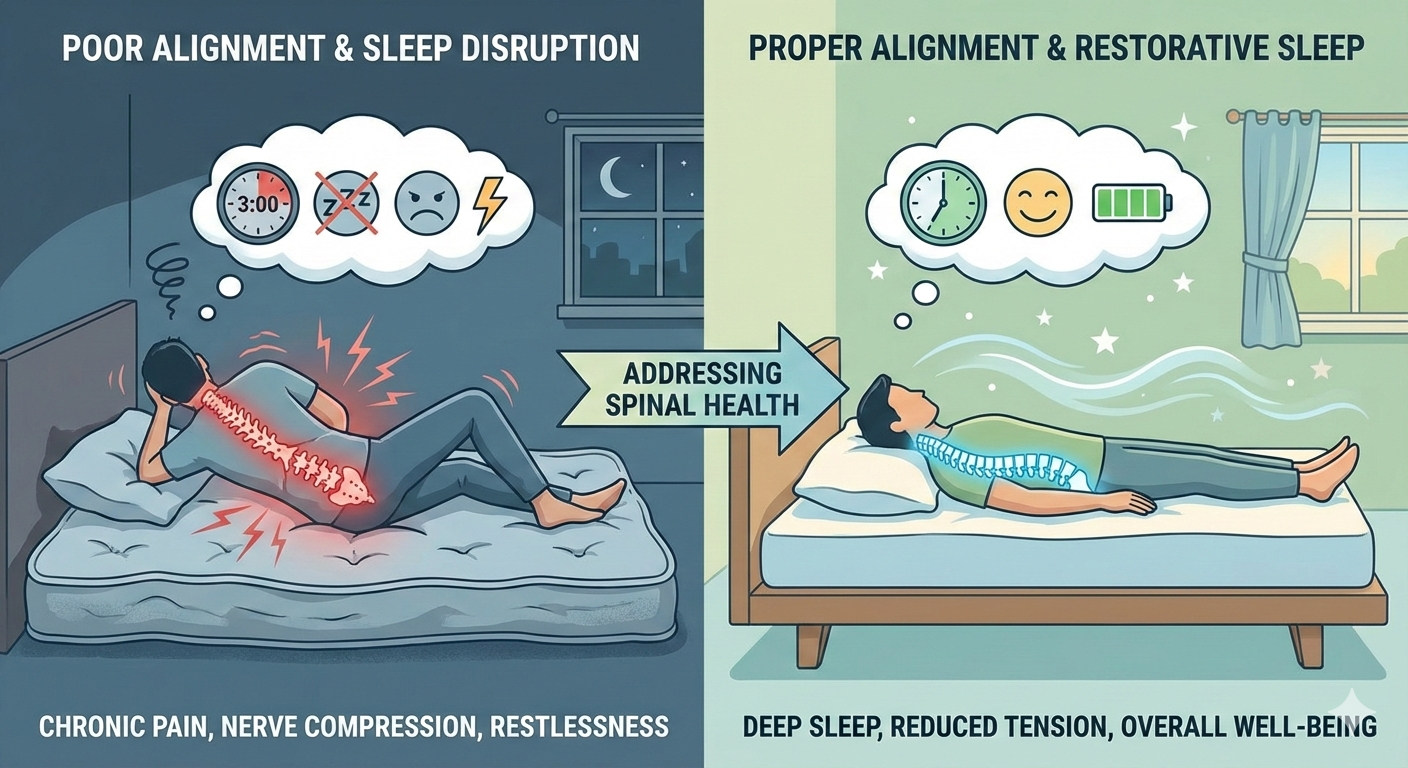
Poor spinal alignment can indeed affect sleep quality. When the spine is misaligned, it may cause discomfort, leading to difficulty falling asleep or staying asleep. This misalignment can pinch nerves and create tension, disrupting deep sleep. Consequently, restorative sleep is compromised, affecting daily life.
Addressing spinal issues through proper alignment can enhance sleep. Understanding this connection is essential for improving overall health and there’s much more to explore about how spinal health impacts sleep wellness.
Key Takeaways
- Poor spinal alignment can lead to chronic pain, making it difficult to fall and stay asleep.
- Misalignment may cause nerve compression, resulting in restless legs and disrupted sleep cycles.
- Uncomfortable sleeping positions can exacerbate alignment issues, further diminishing sleep quality.
- Addressing spinal misalignment is essential for achieving restorative sleep and overall well-being.
- Professional evaluations can identify alignment problems, helping improve sleep and daily performance.
Understanding Spinal Alignment
Spinal alignment is a crucial aspect of overall health, as it affects how the body functions. Understanding spinal anatomy helps clarify why alignment importance cannot be overstated. The spine consists of vertebrae, discs and nerves, all working together to support movement and posture.
Proper alignment allows these structures to function efficiently, reducing stress on muscles and ligaments. When the spine is aligned, it promotes better nerve function, which is essential for overall health. Conversely, misalignment can lead to discomfort and tension, highlighting the need for awareness of spinal health. A well-aligned spine is key to maintaining overall well-being.
How Misalignment Affects Sleep Quality
When the spine is not properly aligned, it can lead to disruptions in sleep quality. Misalignment symptoms can manifest in various ways, causing significant sleep disturbances. These disturbances can hinder restorative sleep, impacting overall health.
- Chronic pain can make falling asleep difficult.
- Nerve compression may lead to restless legs at night.
- Uncomfortable sleeping positions can disrupt deep sleep stages.
- Increased stress levels may arise from poor sleep, affecting daily life.
Addressing spinal misalignment can enhance sleep quality, allowing individuals to wake up refreshed and ready to face the day.
The Role of the Spine in Breathing During Sleep
Breathing during sleep is an essential process that can be greatly influenced by spine health. The spine plays a significant role in maintaining proper breath regulation. When the spine is aligned, it allows for ideal lung expansion, facilitating better oxygen intake. Conversely, poor spine mechanics can restrict airflow, leading to disrupted breathing patterns during rest.
Misalignment may cause tension in surrounding muscles, further affecting the diaphragm's function. As a result, ensuring a healthy spine is crucial for achieving restorative sleep, as it directly impacts the body’s ability to breathe efficiently while sleeping, promoting overall well-being and recovery during the night.
Common Signs of Spinal Misalignment
How can someone tell if their spine is misaligned? Recognizing signs of spinal misalignment is essential for overall well-being. Misalignment can lead to discomfort and disrupt restorative sleep.
Common signs include:
- Persistent muscle tension, particularly in the neck and shoulders.
- Frequent headaches or migraines that seem unexplained.
- Nerve irritation, which may cause tingling or numbness in extremities.
- Difficulty maintaining good posture, leading to slouching or stiffness.
Being aware of these symptoms can help individuals seek appropriate care, ensuring healthier sleep and improved daily function. Addressing spinal issues may lead to a more restful, restorative night.
The Impact of Sleep Position on Spinal Health
What role does sleep position play in maintaining a healthy spine? Sleep posture considerably affects spinal curves, which are essential for overall back health. When individuals sleep in positions that support the natural alignment of their spine, they can help reduce strain on muscles and ligaments. For instance, sleeping on the back or side often promotes better spinal alignment.
Conversely, stomach sleeping may lead to excessive twisting, potentially causing discomfort. By understanding the impact of their sleep position, people can make informed choices to foster better spinal health, ultimately leading to improved overall well-being and more restorative sleep.
Strategies for Improving Spinal Alignment
Improving spinal alignment is essential for better sleep and overall health. Key strategies include selecting the right mattress, adopting ergonomic sleep positions and incorporating stretching and strengthening exercises into daily routines. These practices can help support the spine, reducing discomfort and promoting restful sleep.
Proper Mattress Selection
Choosing the right mattress is essential for promoting proper spinal alignment, as a well-supported spine can lead to better sleep quality. The firmness of a mattress plays a vital role in ensuring the spine stays aligned throughout the night. Moreover, maintaining an ideal sleep temperature can enhance comfort, allowing for restorative sleep.
Here are four tips for selecting the perfect mattress:
- 1. Test different mattress firmness levels to find what feels best.
- 2. Choose materials that regulate sleep temperature effectively.
- 3. Consider your preferred sleeping position.
- 4. Look for warranties that guarantee quality and durability.
These factors can greatly improve sleep quality and spinal health.
Ergonomic Sleep Positions
Selecting the right mattress is just one part of achieving better sleep and spinal health; the way one sleeps also plays a significant role. Ergonomic sleep positions can greatly improve body alignment. For instance, side sleeping often requires specific pillow height to maintain neck support and prevent strain.
Moreover, mattress firmness should complement individual preferences, ensuring adequate back support. Proper sleep posture, whether on the back or side, can alleviate pressure points and enhance comfort. By focusing on these aspects, individuals can promote better spinal alignment, leading to more restorative sleep and overall well-being.
Stretching and Strengthening Exercises
Engaging in stretching and strengthening exercises can greatly benefit spinal alignment and overall health. These activities promote flexibility routines, enhancing core stability and supporting the spine. Regular practice can improve poor posture and reduce discomfort, making a significant impact on sleep quality.
- Enhanced Flexibility: Allows for better movement and reduced stiffness.
- Stronger Core: Supports the spine, preventing misalignment.
- Improved Posture: Reduces stress on the spine during daily activities.
- Better Sleep Quality: Alleviates tension, making it easier to rest.
Incorporating these exercises into daily life fosters a healthier spine and promotes restorative sleep.
The Connection Between Stress, Sleep and Spine Health
Stress can considerably affect sleep quality, leading to a cycle that negatively influences overall health. When individuals experience poor sleep, their spinal alignment may also suffer, resulting in discomfort and pain. Understanding the relationship between stress, sleep and spine health is essential for promoting better well-being.
Stress and Sleep Quality
A strong connection exists between stress, sleep quality and spine health. High stress can lead to poor sleep, which may, in turn, affect spine alignment and overall well-being. Effective stress management and relaxation techniques are essential for promoting restorative sleep and maintaining a healthy spine.
Consider the following points:
- 1. Increased stress can lead to muscle tension, affecting spinal alignment.
- 2. Poor sleep quality can hinder the body’s ability to heal.
- 3. Chronic stress may result in long-term spine issues.
- 4. Implementing relaxation techniques can enhance sleep quality and reduce stress.
Understanding this relationship is crucial for overall health and wellness.
Spinal Alignment Impact
Muscle tension and discomfort can arise from the pressures of daily life, affecting much more than just mood and energy levels. Poor spinal alignment can lead to increased stress and inadequate sleep, creating a cycle that damages overall spinal health. When the spine is misaligned, it can cause pain, making it difficult to maintain proper sleep hygiene.
This lack of restorative sleep further exacerbates tension, impacting daily functioning. To improve both sleep quality and spinal health, individuals should prioritize proper posture and consider stress-reduction techniques. By addressing these interconnected issues, one can foster a healthier, more restful lifestyle.
Seeking Professional Help for Spinal Issues
When individuals experience persistent spinal issues, seeking professional help becomes essential for their overall well-being. A chiropractic evaluation can uncover alignment problems, while massage therapy may relieve pain and improve function.
The journey to recovery often involves:
- Gaining insights into spinal health through expert assessments.
- Learning effective exercises tailored to individual needs.
- Discovering lifestyle changes that foster long-term wellness.
- Experiencing relief that enhances sleep quality and daily life.
Addressing spinal issues not only alleviates discomfort but also promotes restorative sleep, leading to a happier, healthier existence. Prioritizing spinal health is a vital step toward overall wellness.
Post a comment