How Long Does Being High Actually Last? Experts Explain the Timeline
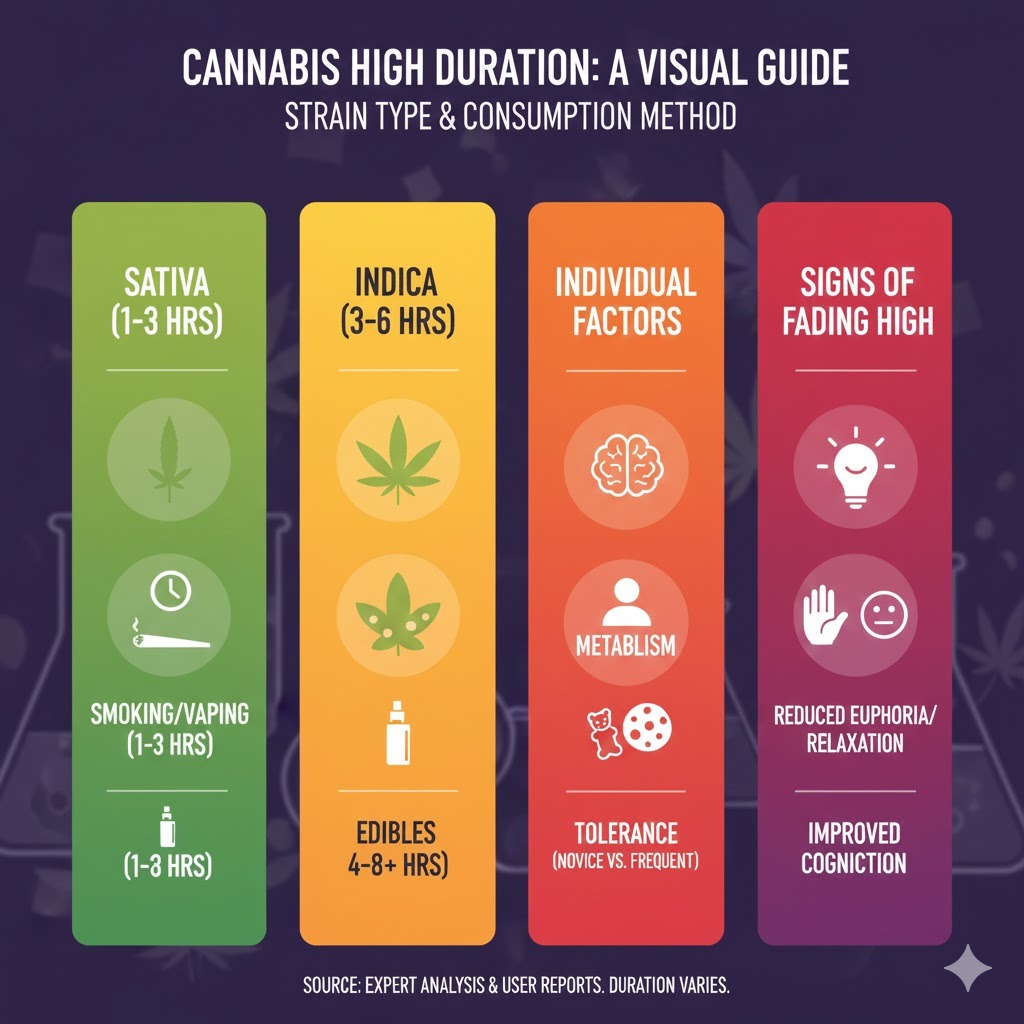
The duration of being high from cannabis depends on various factors. Generally, sativa strains result in shorter highs lasting 1-3 hours, while indica strains can last 3-6 hours. Smoking or vaping yields shorter effects, while edibles take longer to kick in but often last 4-8 hours.
Individual tolerance and metabolism also play vital roles. Signs of a fading high include reduced euphoria and relaxation. Understanding these factors can help enhance your experience, leading to more insightful choices.
Key Takeaways
- The duration of a cannabis high varies based on the strain; sativa effects last 1-3 hours, while indica can last 3-6 hours.
- Consumption method significantly affects duration; smoking/vaping provides a high for 1-3 hours, while edibles can last 4-8 hours or more.
- Individual factors like tolerance and metabolism play a crucial role, with novice users often experiencing longer-lasting effects than frequent users.
- Signs of a fading high include reduced euphoria, waning relaxation and improvements in cognitive functions like memory and attention.
- Managing the experience by recognizing fading effects can enhance enjoyment and prevent discomfort during the high.
Understanding the Cannabis High - What Happens in the Brain
When someone uses cannabis, a fascinating process occurs in the brain that leads to the feeling of being high. The active compounds in cannabis interact with brain receptors, particularly the cannabinoid receptors. This interaction triggers neurotransmitter release, which affects mood, perception and coordination.
For example, dopamine, a neurotransmitter linked to pleasure, increases during this process. As these chemicals flow, the brain experiences altered states, leading to the euphoric sensations many associate with cannabis use.
Understanding this brain receptor interaction helps clarify how cannabis can create such profound effects on thoughts and feelings, transforming ordinary moments into extraordinary experiences.
Factors Influencing Duration of Effects
Several factors can influence how long the effects of being high last. For instance, different strains of cannabis contain varying levels of THC, which can lead to shorter or longer experiences – check out this in-depth article on the differences between indica and sativa. Furthermore, the method of consumption, as well as an individual's tolerance, plays a significant role in determining the duration of these effects.
Strain Type Differences
Different strains of cannabis can greatly influence how long someone feels high. Sativa strain effects are often more energizing and can lead to a shorter high, typically lasting around two to three hours. In contrast, indica strain effects are known for their relaxing qualities and often produce a longer-lasting high, sometimes exceeding three hours.
Hybrid weed characteristics can vary, blending both sativa and indica traits, which may impact duration based on the dominant strain. Furthermore, strain potency plays an essential role; higher potency generally results in a more intense and longer-lasting experience, while lower potency may shorten the duration of effects.
Consumption Method Impact
The method of cannabis consumption plays a significant role in determining how long the effects will last. For instance, THC vaping benefits include quicker onset and shorter duration, often lasting one to three hours. This method allows cannabinoids to enter the bloodstream rapidly, creating a fast-acting high.
In contrast, THC tincture effects may last longer, typically ranging from four to six hours. Tinctures are absorbed sublingually, providing a gradual release of cannabinoids. Each consumption method influences not only the duration but also the intensity of the high, highlighting the importance of choosing the right method for individual preferences and desired experiences.
Individual Tolerance Levels
Individual tolerance levels greatly influence how long the effects of cannabis last for each person. Tolerance development occurs as individuals use cannabis over time, leading to diminished effects. This means that frequent users may feel high for shorter periods compared to occasional users.
Furthermore, individual metabolism plays a key role; some people process cannabinoids faster than others. Factors such as age, body weight and overall health can affect metabolism, further impacting the duration of effects.
Understanding these personal differences helps users anticipate their own experiences with cannabis, promoting safer and more informed consumption practices.
Different Strains and Their Impact on Duration
How can the type of cannabis strain affect how long someone feels high? Different strains, such as sativa, indica and hybrids, have unique characteristics that influence duration.
- 1. Sativa Effects: Typically energizing, sativa strains may lead to shorter highs, often lasting 1-3 hours.
- 2. Indica Effects: Indica strains are more relaxing and can produce longer-lasting effects, usually 3-6 hours.
- 3. Hybrid Characteristics: These strains blend effects, so duration varies based on their specific cannabinoid ratios and terpene influence.
Strain potency, flavor profiles and personal strain selection also play essential roles in how long the high lasts, affecting both medical and recreational users.
Methods of Consumption - Smoking, Edibles and More
When it comes to experiencing the effects of cannabis, the method of consumption plays a significant role. Smoking often provides a quicker onset and shorter duration of effects, while edibles can take longer to kick in but may last much longer.
Furthermore, alternative methods of consumption, such as oils or vaporizers, can also influence how long someone feels high, highlighting the importance of understanding each option.
Smoking Effects Duration
Smoking cannabis typically produces effects that last for a relatively short duration compared to other consumption methods. The experience can vary based on several factors, including smoking techniques and strain potency. Generally, users can expect effects to last for:
- 1. 1 to 3 hours: Most noticeable effects occur within this time frame.
- 2. Peak effects: Users often feel the strongest high about 30 minutes after smoking.
- 3. Residual effects: Some mild effects may linger for hours after the peak.
Understanding these timelines helps users manage their experiences and expectations when choosing to smoke cannabis.
Edibles Onset Time
What makes edibles a unique way to experience cannabis is their longer onset time compared to smoking. When consuming cannabis edibles, the effects can take anywhere from 30 minutes to two hours to kick in, depending on the edible types and individual metabolism.
This delayed onset occurs because the body must digest the edible before THC enters the bloodstream. Moreover, dosage effects can vary greatly; a small dose may provide mild relaxation, while a higher dose can lead to stronger psychoactive effects.
Understanding these factors is essential for users seeking a controlled and enjoyable cannabis experience with edibles.
Alternative Methods Impact
Different methods of cannabis consumption can greatly impact the duration and intensity of the high experienced. Traditional smoking may offer a quicker onset, while alternative consumption methods, like edibles, can lead to a longer-lasting effect. Non-traditional methods also play a role in this experience.
- 1. Smoking: Effects are felt almost immediately, lasting 1-3 hours.
- 2. Edibles: These take longer to onset, lasting 4-8 hours or more.
- 3. Vaping: Similar to smoking but may have a slightly longer duration.
Understanding these different methods helps users make informed choices about their cannabis experience.
Individual Tolerance Levels and Their Role
While the effects of being high can vary greatly from one person to another, individual tolerance levels play a significant role in determining how long these effects last. Tolerance levels refer to how a person's body adapts to substances over time. A user with a higher tolerance may experience shorter effects, as their body is more accustomed to the substance.
Conversely, a novice user might feel the effects linger longer. This difference in user experience highlights the importance of understanding one’s own tolerance. Ultimately, recognizing tolerance levels can help individuals manage their expectations and enhance their overall experience.
Signs That the High Is Winding Down
As the high begins to fade, several noticeable signs can indicate that the effects are winding down. Users may experience a decrease in euphoria, with feelings of relaxation subsiding. Cognitive functions, such as memory and attention, often return to normal, leading to clearer thinking.
Physical sensations might shift, as the heightened awareness of touch or taste diminishes. Furthermore, users may feel more tired or restless, signaling the end of the experience. These fading effects can vary by individual, but recognizing these signs helps in understanding when the high is coming to a close, providing a clearer perspective on one’s state.
Tips for Managing Your Experience
Managing the experience of being high can markedly enhance enjoyment and comfort. Effective experience management often involves strategies for emotional grounding.
Here are three tips to reflect on:
- Set Your Environment: Choose a comfortable space. Familiar surroundings can reduce anxiety and enhance relaxation.
- Stay Hydrated: Drinking water can help mitigate dry mouth and maintain comfort levels.
- Engage in Light Activities: Listening to music or watching a movie can keep the mind engaged without overwhelming it.
Post a comment